Trade · Thailand ↔ Russia, CIS, worldwide
Sourcing from Thailand without the risk: Thai-language negotiation, contracts, control
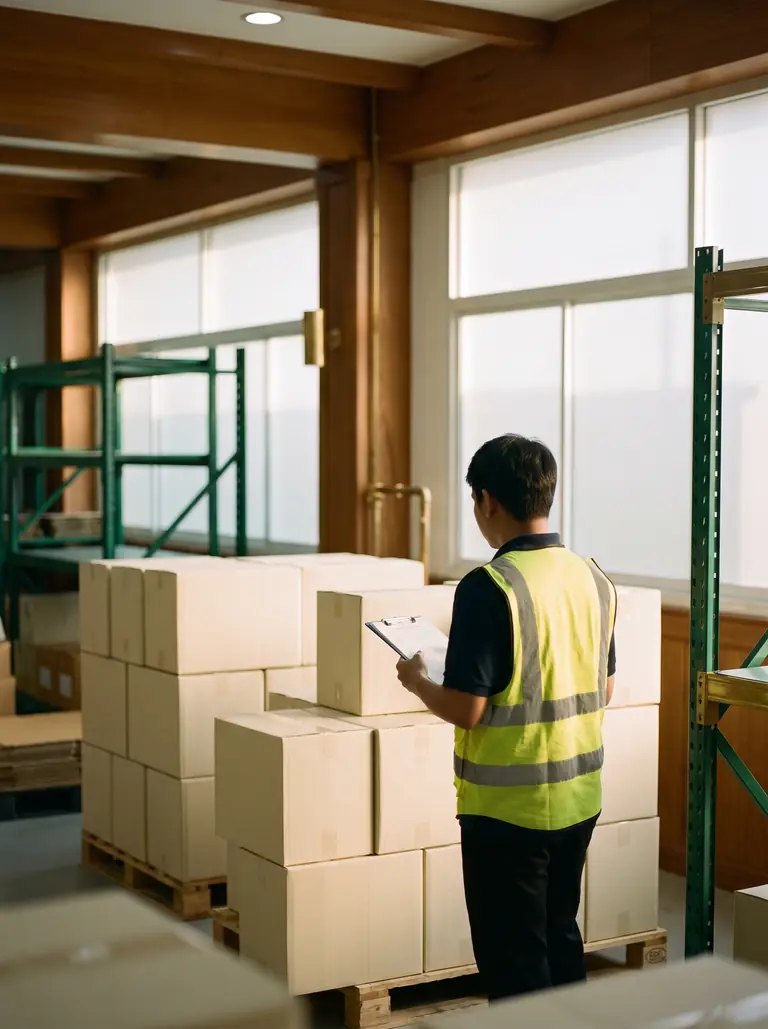
We're on the ground: we visit the factory, talk to the manufacturer in their own language, put the terms in the contract and make sure they're met.
- Manufacturer check: registration, capacity, reputation
- Contract in English and Thai, delivery terms under Incoterms
- Quality and shipment control, customs documents
20+ years in ThailandEnglish · Русский · ไทย
A Sabai Legal lawyer will reply — in English, Russian or Thai

What usually goes wrong
- 01
Prepayment, then silence.
The money is sent, the factory keeps delaying — and from another country you can't check anything.
- 02
The language barrier.
Key agreements stay verbal and get lost in translation.
- 03
Paperwork.
Errors in certificates of origin and invoices are costly at customs.
What customs and regulators require
The key rules for importing into and exporting from Thailand. Checked against official sources on 17 October 2026.
Requirements change. We check them against official sources before every application.
-
Customs registration
To file declarations yourself, the importer or exporter must register with the Customs Department. At a registration unit, the original ID card or passport of the authorised signatory is shown to the officer. The online Customs Trader Portal is open only to Thai nationals and to companies whose directors are all Thai. The Online Customs Registration website requires a digital certificate. Before applying, check the company's English name as registered with the DBD.
Source: Thai Customs Department
-
Imports: declaration and payment before release
The importer files form 99/1, which is also the excise and VAT return. The data goes to the Customs system electronically: from the importer itself after registering, from a customs broker or through a service counter. Duty and taxes are paid before the goods are released. Based on risk, the system assigns a lane: green with no inspection, red with inspection.
Source: Thai Customs Department
-
Exports: declaration before the goods reach the port
The exporter or its agent sends the export declaration (form 101/1) and the invoice to Customs electronically. The system issues a declaration number, the exporter pays any export duty and the fee, and only then are the goods moved to the port. Controlled goods need an export licence or another permit document. Whether the seller or the buyer handles export clearance depends on the Incoterms rule in your contract.
Source: Thai Customs Department
-
Restricted and prohibited goods
Restricted goods need a licence or must meet specific rules, such as labelling or a certificate of analysis. Prohibited goods include, among others, goods with counterfeit trademarks and goods that infringe copyright. Importing or exporting prohibited goods, or restricted goods without a permit, is an offence under the Customs Act B.E. 2560 (2017), sections 244 and 246.
Source: Thai Customs Department
-
Food and cosmetics go through the Thai FDA
Food may be imported for sale only under a Thai FDA licence (Food Act B.E. 2522, section 15). The importer needs a commercial registration, a place of business in Thailand, and premises and storage that meet FDA criteria. Cosmetics for sale may be imported only after the Thai FDA issues a notification receipt (Cosmetics Act B.E. 2558, article 14).
Source: Thai FDA; Food Act B.E. 2522 (1979), Cosmetics Act B.E. 2558 (2015)
-
Certificate of origin
For imports into Thailand, a certificate of origin is needed to claim a reduced duty rate. For exports, certificates are issued by the Department of Foreign Trade (DFT) through its online system. Under the DFT Self-Certification system, a registered exporter certifies the origin of its goods itself. To register, a manufacturer also submits its factory licence (for example, Ror.Ngor.4 or an IEAT permit) and a description of the production process.
Source: Thai Customs Department; Department of Foreign Trade (DFT)
-
VAT: exports are zero-rated
Exports of goods are taxed at 0% VAT. On imports, Customs collects VAT on the CIF price plus import duty, excise and any other taxes and fees.
Source: Revenue Department of Thailand
-
Selling inside Thailand: the Foreign Business Act
A company counts as foreign if foreigners hold half of its capital or more. Such a company needs a Foreign Business Licence (FBL) or a certificate — for example, one based on BOI promotion — for retail with total minimum capital under 100 million THB (or under 20 million THB per shop) and for wholesale with minimum capital under 100 million THB per outlet.
Source: Foreign Business Act B.E. 2542 (translation for the DBD)
How we help
- 01
Supplier search and check
Registration, capacity and reputation.
Choose - 02
Negotiation and contract
In Thai, with a contract in English and Thai.
Choose - 03
Production and shipment control
Quality, shipment and customs documents.
Choose - 04
Payment support
Money moves only once the terms are met.
Learn more
Documents for the deal
Manufacturer check
- Recent company registration extract from the DBD
- Financial statements and shareholder list from DBD DataWarehouse+
- Factory operating licence (for example, Ror.Ngor.4 or an IEAT permit)
- Photo and video report from the production site
Contract and payment
- Contract in English and Thai with the Incoterms 2020 rule and delivery point
- Product specification, quality and packing requirements
- Pro forma invoice
- Payment terms: a letter of credit under ICC UCP 600 or a contractual escrow arrangement
Shipment and Thai customs
- Commercial invoice
- Packing list
- Bill of lading, or an air waybill for air freight
- Cargo insurance premium invoice — for imports
- Certificate of origin — to claim a reduced duty rate
- Licence or permit — for restricted goods
- Other documents — for example, on the goods' composition, properties and use, or a catalogue
The customs list follows the Thai Customs Department. Your customs broker checks the destination country's rules. We make sure the contract, invoice and certificates all match.
Send documents for a check
Trade service prices
-
Manufacturer check
- Our fee
- from 10,000 THB
- Registration, capacity and reputation
- Most popular
Negotiation + contract
- Our fee
- from 35,000 THB
- Negotiation in Thai
- Contract in English and Thai
- Delivery terms under Incoterms
-
Full delivery support
- Our fee
- from 60,000 THB or 5–10% of the deal
- Quality and shipment control
- Customs documents check
Pay in stages
30% at the start, 70% after the result. Longer projects are paid by contract stages.
Guarantee
If an application is refused because of our mistake, we refund our fee in full. We guarantee the process, not the authority's decision.
Trust you can verify
- 20+ years in Thailand
- 0% VAT on exported goods
- 11 rules in Incoterms 2020
We work with
- Immigration Bureau
- Department of Business Development (DBD)
- Revenue Department
- Ministry of Labour
- Banks
How we work
-
Step 1
Request
Take the quiz or message us — we reply within 15 minutes.
-
Step 2
Case review and price
We discuss the product, the stage and the destination, and give you a price.
-
Step 3
Checks and negotiation
We check the manufacturer and talk to them in their own language.
-
Step 4
Contract and support
We put the terms in the contract and make sure they are met.
-
Step 5
Result
Quality and shipment control, customs documents.
Find your solution in 1 minute
Answer a few questions — a specialist will send you options with prices.
- Available every day Reply within 15 minutes, 9:00–21:00, case status in a Telegram bot.
- Price before we start Our fee and the government fee as separate lines. Pay in stages.
- No grey schemes We don't sell nominees, rent out deposits or promise "100% approval".
Step 1 of 5 · Need
What do you need?
Pick one — the next question opens automatically
Product category?
Pick one — the next question opens automatically
What stage are you at?
Pick one — the next question opens automatically
Shipping destination?
Pick one — the next question opens automatically
Request received
- Confidential
- Reply within 15 minutes
- Price before we start
How we differ from a typical agent
| Criterion | Sabai Legal | Typical agent |
|---|---|---|
| Price | Fixed, published on the site | "Message us and we'll quote" |
| Government fees | Shown as a separate line | Hidden in the total |
| Payment | In stages | 100% upfront |
| Company structure | Legal, no nominees | Nominee shareholders |
| Response | 15 minutes, 7 days a week | "On business days" |
| Case status | In a Telegram bot | Only by phone |
| Language with authorities | Thai, in person | Through an interpreter |
Frequently asked questions
Do you buy the goods yourselves?
No. We represent your interests: checks, negotiation, contract, control. You are the buyer.
Can I visit the factory with you?
Yes. Or we can go on our own and send you a photo and video report.
What language is the contract in?
Usually bilingual: English and Thai.
Do you help with logistics?
We coordinate the shipment with your logistics provider and check the shipping documents, matching the invoice and certificate of origin against the contract.
Which Incoterms edition should the contract use?
The current edition is Incoterms 2020: 11 rules published by the International Chamber of Commerce (ICC). The contract should name the rule, the place and the edition, for example "FOB Laem Chabang, Incoterms 2020". The rule decides who pays for freight and insurance, who handles export clearance and when the risk passes to you.
Which law should govern the contract?
Thailand is not a party to the UN Convention on Contracts for the International Sale of Goods (CISG). So it is best to state the governing law and how disputes are resolved directly in the contract. Thailand is a party to the 1958 New York Convention on foreign arbitral awards, which matters if you choose arbitration.
How do you check a Thai factory?
We check the company's registration, financial statements and shareholders in the Department of Business Development database (DBD DataWarehouse+). We ask for the factory licence, for example Ror.Ngor.4. Then we visit the site and see the production capacity for ourselves.
Who issues the certificate of origin?
Export certificates of origin are issued by Thailand's Department of Foreign Trade (DFT) through its online system. There is also self-certification: an exporter registered in the DFT Self-Certification system certifies the origin itself. Registration needs a company registration certificate no older than three months, the authorised signatory's ID card or passport, a map of the address and a letter confirming the goods meet the rules of origin. A manufacturer adds its factory licence, a description of the production process and a map of the production and storage sites. We check that the certificate matches the contract and the invoice.
Do I need a licence to import goods into Thailand?
Restricted goods need a licence or must meet specific rules, such as labelling. Food for sale is imported under a Thai FDA licence, and cosmetics only after the Thai FDA issues a notification receipt. We can help with permits — see our Licences service.
Can a foreign company sell goods inside Thailand?
Yes, with limits. If foreigners hold half of the capital or more, retail with total minimum capital under 100 million THB (or under 20 million THB per shop) and wholesale with minimum capital under 100 million THB per outlet require a Foreign Business Licence (FBL) or a certificate — for example, one based on BOI promotion. We find a legal route — no nominees.
Often needed together

Deal support
Deal escort
Negotiations and deals with Thai partners
from 15,000 THB/day

Companies & licences
Company registration
Starting a business in Thailand with a legal structure
from 28,000 THB
Companies & licences
Business licences
Tour companies, hotels and villas, restaurants and bars, food and cosmetics importers
from 30,000 THB
Tell us what you're sourcing
Share the product and where it's going, and a trade specialist will reply within 15 minutes.
Every day, 9:00–21:00 (Bangkok time)
A Sabai Legal lawyer will reply — in English, Russian or Thai